
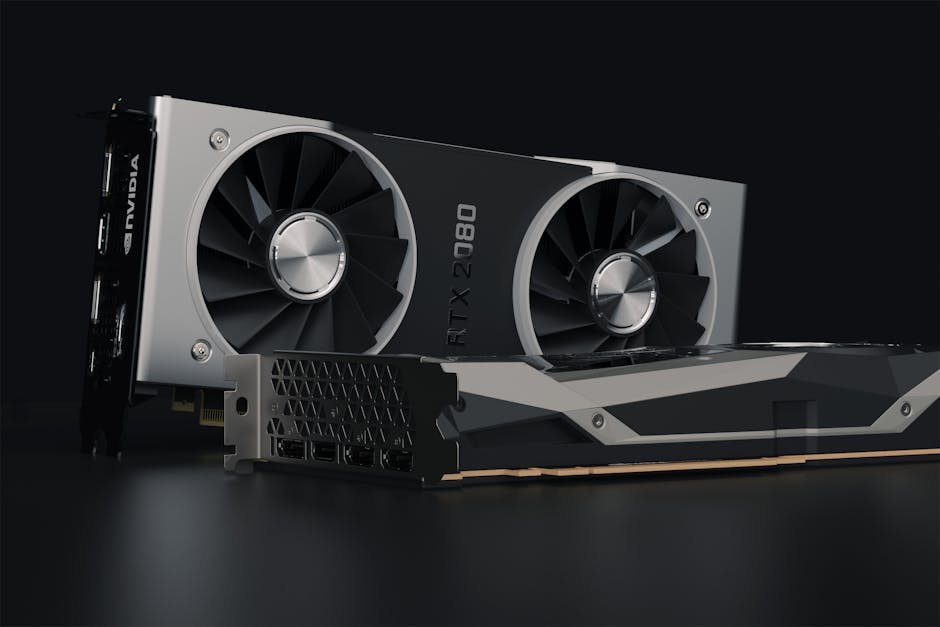
A California-based startup, Span, is pioneering a novel approach to AI compute infrastructure, deploying what it calls ‘fractional data centers’ or XFRA units directly onto residential homes. This initiative, backed by Nvidia’s advanced GPU technology and tested by homebuilder PulteGroup, aims to tap into underutilized local grid capacity to meet the surging demand for AI processing power.
The innovative system integrates Nvidia’s liquid-cooled RTX PRO 6000 Blackwell Server Edition GPUs, marking one of their first market uses. These specialized GPUs operate without fans, ensuring silent operation, a critical feature for residential deployment. As reported by www.cnbc.com, the collaboration seeks to address the growing challenge of powering large, centralized data centers.
Leveraging Existing Infrastructure for AI Compute
Nvidia’s senior managing director of global energy industry, Marc Spieler, highlighted the strategic advantage of this distributed model. "We’re trying to get access to power, and there’s a lot of power right now on the grid. But, unfortunately, to come up with large loads for big data centers – it’s a challenge," Spieler stated in the CNBC report. "The ability to leverage existing locations that have access to power makes a lot of sense. … We believe that we can bring on AI solutions quicker, and it should add to the affordability story."
Span’s system is comprehensive, featuring its smart electrical panel, the XFRA unit itself, a home backup battery, and in some installations, solar panels. These small, white XFRA boxes, housing the high-performance hardware, are installed on the exterior of homes, designed to blend seamlessly with existing HVAC and electrical systems. The core idea is to identify and utilize unused electrical capacity within local grids, a task made possible by Span’s smart panel technology.
The AI Compute Threshold Report
We analyzed pricing from 150+ GPU cloud providers to find the exact threshold where an AI startup's OpenAI API bill eclipses the cost of a dedicated H100 cluster.
Read the Full ReportThe XFRA Unit: A New Paradigm for Data Centers
The XFRA units represent a significant departure from traditional data center models. Instead of massive, centralized facilities, Span is creating a network of smaller, localized nodes. Hyperscalers and GPU cloud providers can then tap into this distributed network, much as they would a conventional data center, but with potentially enhanced flexibility and resilience.
Arch Rao, founder and CEO of Span, emphasized the foundational nature of this venture. "Fundamentally, it’s an infrastructure play," Rao told CNBC. "We’re uniquely positioned to build infrastructure that can simultaneously help us meet what is clearly an insatiable demand for more compute, much more cost effectively, while benefiting individual consumers."
Unlocking Efficiency and Speed
One of the most compelling aspects of Span’s approach is its potential for rapid and cost-effective deployment. The company claims it can install 8,000 XFRA units approximately six times faster and at five times lower cost than the construction of a typical centralized 100-megawatt data center of comparable size. This efficiency is critical in an era where AI development is often bottlenecked by the availability of compute resources.
The integration of Nvidia’s liquid-cooled RTX PRO 6000 Blackwell Server Edition GPUs is central to the XFRA unit’s performance. These GPUs are designed for high-density compute, crucial for AI and machine learning workloads, while the liquid cooling ensures optimal thermal management without the noise associated with traditional fan-cooled systems.
Implications for AI Workloads and GPU Cloud Providers
The deployment of these fractional data centers could have far-reaching implications for the AI industry. By distributing compute power closer to the edge, Span’s network could facilitate lower latency for certain AI applications, potentially enabling new use cases in areas like autonomous systems, smart cities, and localized AI processing.
For GPU cloud providers, this model presents an opportunity to expand their reach and diversify their infrastructure, potentially offering more resilient and geographically dispersed compute options. The ability to quickly scale compute capacity by leveraging existing residential grids could alleviate some of the pressure on traditional data center expansion, which often faces significant hurdles related to land acquisition, power availability, and construction times.
PulteGroup’s involvement in testing these systems in select communities signals a growing interest from the real estate sector in integrating advanced AI infrastructure directly into residential developments. This partnership underscores the potential for a symbiotic relationship between housing development and the burgeoning demand for AI compute.
As the AI landscape continues to evolve, Span’s collaboration with Nvidia and PulteGroup represents a bold step towards a more distributed, efficient, and potentially more affordable future for AI infrastructure, moving high-performance computing from industrial parks directly to neighborhoods.
Get personalised, no-commitment quotes from top AI infrastructure providers in under 2 minutes.


