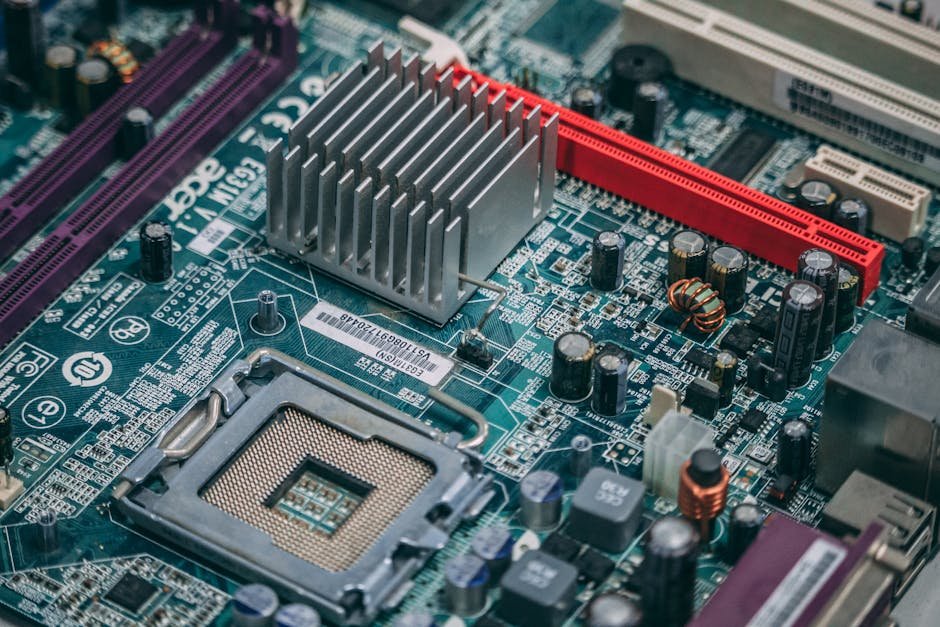
Intel’s latest professional-grade GPU, the Arc Pro B70 with 32GB of VRAM, is making waves following independent gaming performance tests that reveal substantial gains over its predecessor and competitive standing against rivals. While initial benchmarks, as reported by wccftech.com, focused on gaming, the underlying architectural improvements and significant memory capacity hold considerable implications for AI and compute-intensive cloud workloads.
According to the report, the Intel Arc Pro B70 delivered up to a 40% increase in rasterization performance and a remarkable 65% boost in ray tracing capabilities compared to the previous B580 model. More notably, these tests position the B70 in direct competition with NVIDIA’s RTX 5060 Ti 16GB, trading blows in various scenarios. This level of performance, particularly from a ‘Pro’ series card, suggests Intel is serious about carving out a significant niche in the professional GPU market, which extends well beyond traditional gaming.
The Significance of 32GB VRAM for AI Workloads
For cloud providers and developers leveraging GPU specifications for AI, the 32GB of VRAM on the Arc Pro B70 is a critical specification. Large Language Models (LLMs) and complex deep learning tasks demand substantial memory to store model parameters and intermediate data. While consumer GPUs often cap out at 16GB or 24GB, 32GB positions the B70 as a viable option for running larger models or managing multiple smaller models concurrently, reducing the need for frequent data swaps between GPU and system memory.
This substantial memory capacity, combined with the observed performance uplift, indicates that the Arc Pro B70 could offer a compelling alternative for GPU cloud providers looking to diversify their offerings beyond the dominant NVIDIA ecosystem. The improved ray tracing performance, while highlighted in gaming, also translates to better performance in specific scientific visualization and rendering tasks often found in professional compute environments.
The AI Compute Threshold Report
We analyzed pricing from 150+ GPU cloud providers to find the exact threshold where an AI startup's OpenAI API bill eclipses the cost of a dedicated H100 cluster.
Read the Full ReportIntel’s Broader AI Strategy and Ecosystem
The Arc Pro B70’s emergence is part of Intel’s broader, aggressive push into the AI hardware space. Recent developments underscore this commitment, including reports that Intel’s latest drivers allow users to allocate up to 93% of system memory to Arc iGPUs for wider AI LLM support. While this specific feature targets integrated graphics, it reflects Intel’s strategic focus on optimizing memory access and utilization for AI applications across its GPU portfolio.
Furthermore, the Wccftech summary also touched upon a reported quad-GPU setup of the Intel Arc Pro B70 consuming up to 720W in inference workloads. This detail is highly relevant for data centers and cloud providers, indicating the card’s scalability and potential for high-density AI inference deployments. Such configurations could offer significant computational power for demanding enterprise AI applications.
Intel’s commitment to building next-gen discrete GPUs, even if primarily for professional and data center segments rather than solely for gamers, reinforces their long-term vision. The Arc Pro B70 appears to be a crucial step in this direction, demonstrating that Intel is not just participating but actively competing in the high-performance GPU market for AI and professional applications.
Market Implications for Cloud AI
For ComputeStacker.com readers, the Intel Arc Pro B70 represents a potentially valuable new option in the increasingly competitive GPU cloud market. The introduction of a high-performance, high-VRAM professional GPU from Intel could lead to:
- Increased Competition: More options for cloud providers to offer, potentially driving down costs or offering specialized performance profiles.
- Diversified Workloads: Specific AI workloads might find better optimization on Intel’s architecture, especially as their software stack matures.
- Cost-Effectiveness: Intel’s entry could provide more budget-friendly alternatives for certain AI training and inference tasks compared to established offerings.
As the demand for AI compute continues to skyrocket, the performance demonstrated by the Intel Arc Pro B70, even in initial gaming tests, signals a promising future for Intel’s role in powering the next generation of AI workloads in the cloud. We will continue to monitor how these professional GPUs integrate into cloud infrastructures and perform under real-world AI benchmarks.
Get personalised, no-commitment quotes from top AI infrastructure providers in under 2 minutes.